Watch Dr. Sarraj explain
Trusted resources
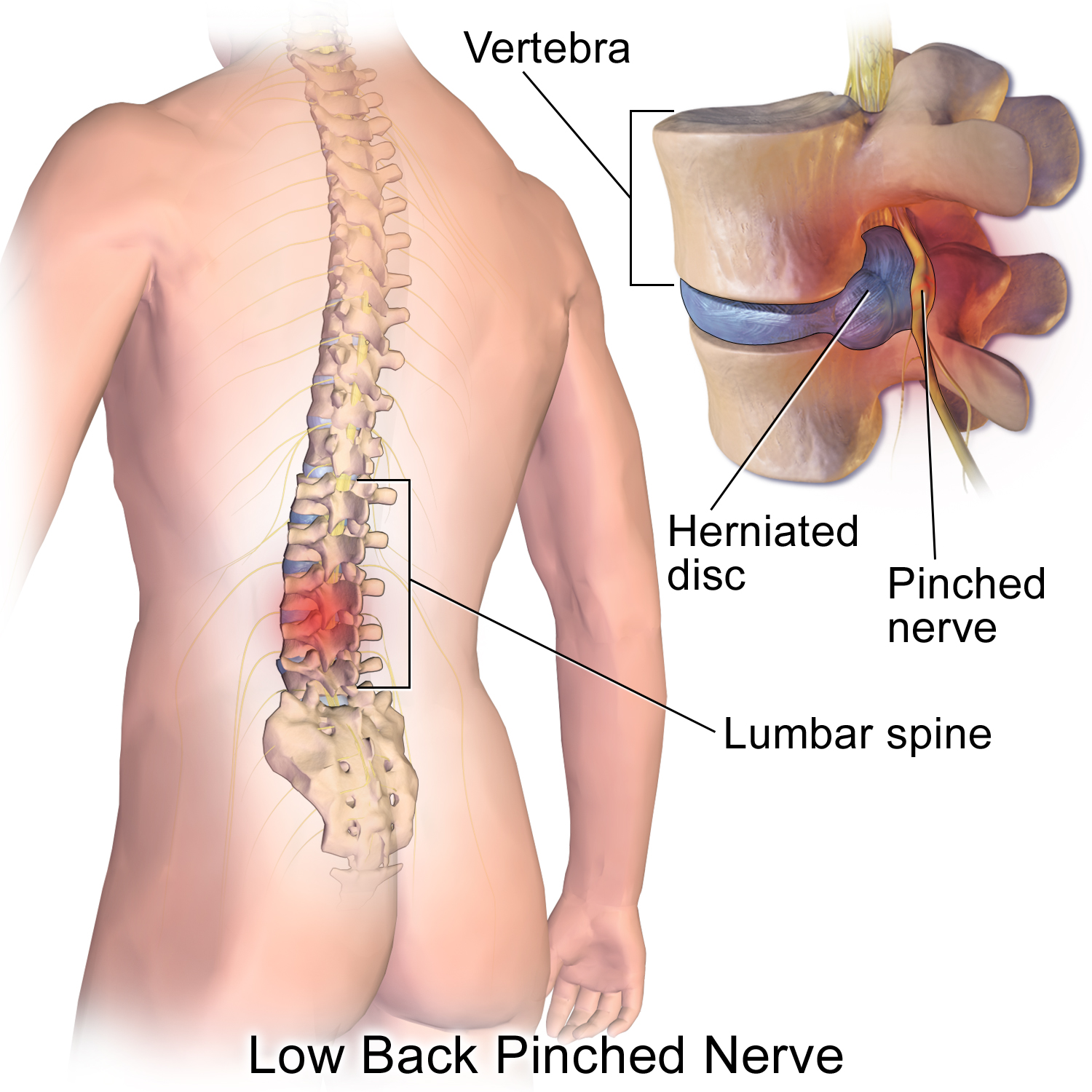
A lumbar disc herniation pressing on a nerve. Microdiscectomy removes the disc material causing this pressure.
BruceBlaus (Blausen Medical Communications) · CC BY 3.0 · View full size · Image credits
What the operation involves
A microdiscectomy removes disc material that is pressing on a nerve in the lower back. The aim is to relieve the nerve pressure while preserving as much of the surrounding structure as possible.
This operation is usually intended to help leg symptoms from a disc herniation. It does not remove all age-related changes in the spine.
Who it suits
Sciatica from a lumbar disc herniation that has not settled with an adequate period of conservative care, or that is accompanied by significant or progressive weakness.
It treats leg pain far more reliably than back pain. If back pain is your dominant symptom, a discectomy is unlikely to be the answer, and that expectation is set clearly before any decision is made.
Recovery
Your hospital stay and recovery plan depend on the operation, your health, and how you are recovering. The team will explain the expected plan before surgery and update it before you go home.
Follow your individual instructions for wound care, medicines, collars or braces, lifting, driving, work, and physiotherapy. Nerve symptoms can improve gradually, and some may persist. Use the recovery guide below to prepare questions for your follow-up.
Risks
Infection, bleeding, a dural tear, and nerve injury. The most common specific issue is recurrence — the same disc herniating again, which happens in a small percentage of cases and occasionally needs a second operation.
Questions for your appointment
- What is the main goal of this treatment for me?
- Which symptoms are likely to improve, and which may remain?
- What are the alternatives and the risks of waiting?
- What help will I need at home, and when can I return to my usual activities?
Further reading
Educational information to support your consultation. The options, risks, and recovery described here may differ from your individual plan. Contact your treating team about new or changing symptoms.