Watch Dr. Sarraj explain
Trusted resources
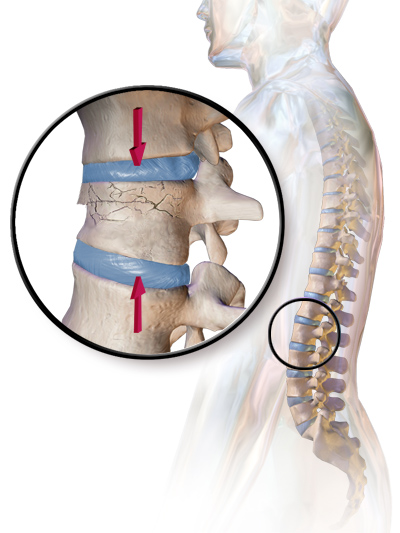
Example anatomy of a vertebral compression fracture, one of the conditions discussed on this page.
BruceBlaus (Blausen Medical Communications), modified by Mikael Häggström, MD · CC BY 3.0 · View full size · Image credits
What the operation involves
Depending on the problem, surgery may create space around the nerves or spinal cord, obtain a tissue sample, or stabilise weakened bones. These are different conditions, so the operation and its urgency vary.
How the plan is made
The team considers nerve function, spinal stability, your general health, and other treatments. For infection or cancer, surgery may be one part of care alongside infectious diseases or oncology specialists.
Recovery
Recovery and rehabilitation depend on the underlying illness and any nerve injury as well as the operation itself. Ask which team to contact, what other treatment is needed, and which changes require urgent assessment.
Risks to discuss
Your discussion may cover infection, bleeding, spinal fluid leakage, nerve injury, implant or healing problems, and further surgery. The underlying condition can change these risks and the expected outcome.
Questions for your appointment
- What is the main goal of this treatment for me?
- Which symptoms are likely to improve, and which may remain?
- What are the alternatives and the risks of waiting?
- What help will I need at home, and when can I return to my usual activities?
Educational information to support your consultation. The options, risks, and recovery described here may differ from your individual plan. Contact your treating team about new or changing symptoms.