Watch Dr. Sarraj explain
Trusted resources
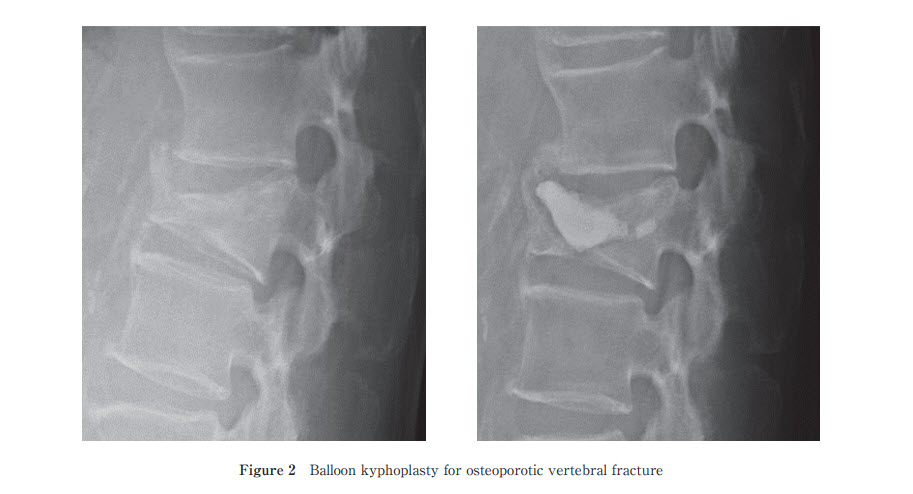
Radiographs from a published kyphoplasty example: a compressed vertebra before treatment (left) and visible bone cement after treatment (right).
Rei Momomura / The Juntendo Medical Society · CC BY 4.0 · View full size · Image credits
What the procedure involves
Through a small opening, the clinician guides a needle into the fractured vertebra using X-rays. A balloon is inflated to create a space, then removed. Bone cement is placed in that space to support the fractured bone.
Kyphoplasty may restore some lost height. It is different from vertebroplasty, which injects cement without first using a balloon.
When it may be considered
It may be considered when severe pain from a recent, unhealed compression fracture persists despite appropriate nonsurgical care. Examination and imaging should confirm that the painful area matches the fracture.
Some fractures improve without a procedure. The decision includes the fracture pattern, bone health, other illnesses, and the benefits and risks of each option.
What it can and cannot do
The goal is to reduce pain from the fractured vertebra and improve movement. Relief is not guaranteed. Kyphoplasty does not treat osteoporosis or directly remove pressure from a nerve or the spinal cord.
Recovery
The team will explain the anaesthetic, observation period, activity plan, and wound care. Recovery and discharge timing vary. Bone health treatment remains important after the procedure.
Risks to discuss
Risks include infection, bleeding, cement leakage, nerve injury, and complications if cement reaches a blood vessel. Further fractures can occur in a spine weakened by osteoporosis. Ask which risks matter for your situation.
Questions for your appointment
- What is the main goal of this treatment for me?
- Which symptoms are likely to improve, and which may remain?
- What are the alternatives and the risks of waiting?
- What help will I need at home, and when can I return to my usual activities?
Further reading
Educational information to support your consultation. The options, risks, and recovery described here may differ from your individual plan. Contact your treating team about new or changing symptoms.