Watch Dr. Sarraj explain
Trusted resources
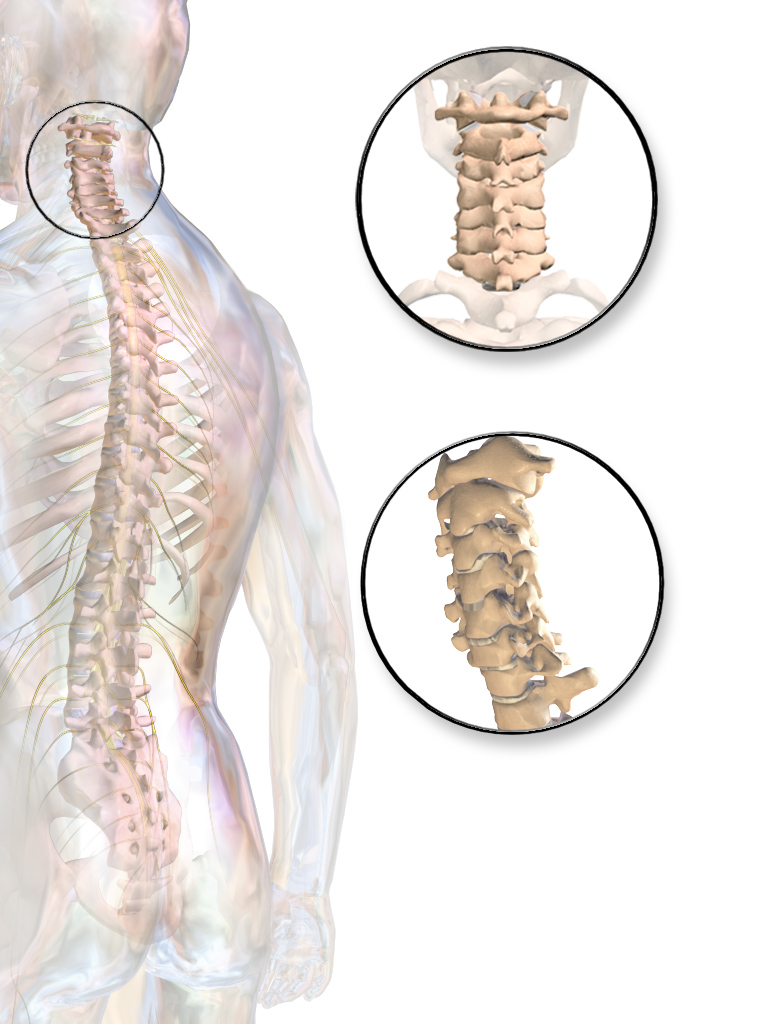
Cervical spine anatomy, showing the neck bones around the levels treated in a posterior cervical operation.
BruceBlaus (Blausen Medical Communications) · CC BY 3.0 · View full size · Image credits
What the operation involves
Pressure is relieved through the back of the neck. Screws, rods, and bone graft can be used to support the spine while the selected levels fuse.
Why it may be recommended
The operation may be considered for spinal cord compression where stability or alignment also needs attention. Your imaging, neck alignment, and symptoms help distinguish it from laminoplasty or an anterior operation.
Recovery
Neck and shoulder soreness and stiffness are common early concerns. The fused levels lose movement. The team will explain any collar, rehabilitation plan, and activity limits for your situation.
Risks to discuss
Risks include infection, bleeding, spinal fluid leakage, nerve or spinal cord injury, new arm weakness, failure of fusion, and implant problems. Further treatment can sometimes be needed.
Questions for your appointment
- What is the main goal of this treatment for me?
- Which symptoms are likely to improve, and which may remain?
- What are the alternatives and the risks of waiting?
- What help will I need at home, and when can I return to my usual activities?
Educational information to support your consultation. The options, risks, and recovery described here may differ from your individual plan. Contact your treating team about new or changing symptoms.